


Complete Guide to Cleaning and Maintaining High Visibility T-Shirts
High visibility t-shirts serve as a “life barrier” for scenarios like sanitation work, construction, cycling, and night operations. Their core value lies in the visibility of the fluorescent fabric and the reflective performance of the reflective strips.
High visibility t-shirts are not ordinary t-shirts. Their core safety function relies on the shiny reflective materials under light. These reflective designs give high visibility t-shirts high visibility in the dark, making them a safety guarantee for people traveling or working at night.
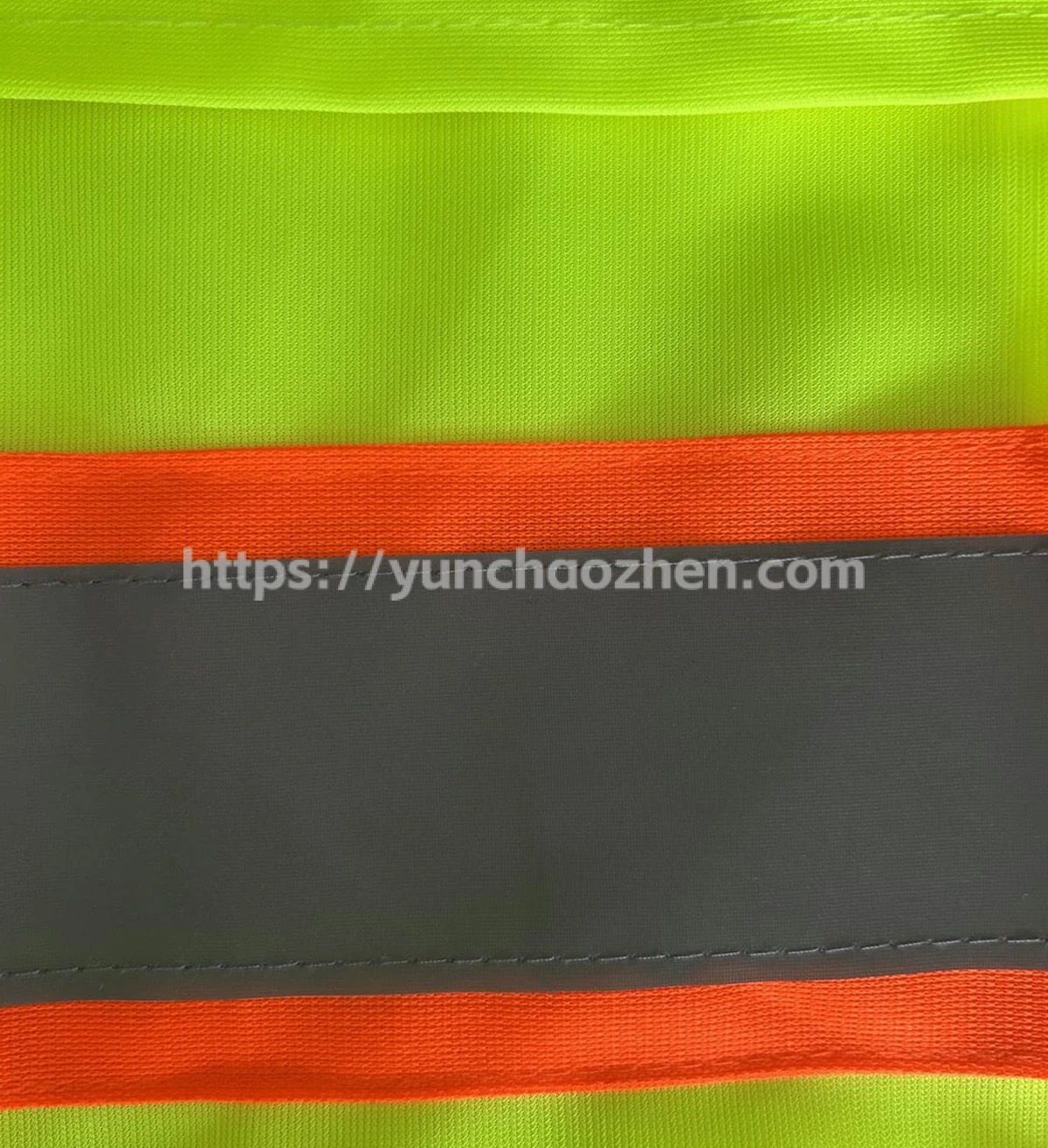
This is the core advantage that distinguishes high visibility t-shirts from ordinary clothing.
Incorrect cleaning methods will directly wear down and damage these precise structures, significantly reducing the retroreflective performance of high visibility t-shirts.
Studies confirm that improper cleaning severely wears and corrodes the reflective materials on high visibility t-shirts, leading to a sharp decline in their core protective performance.
Actual tests show that a damaged high visibility t-shirt may see its effective night visibility drop sharply from 100 meters to tens of meters.
This directly endangers the safety of workers wearing high visibility t-shirts and deprives high visibility t-shirts of their original safety protection significance.
1. Pre-Cleaning Preparation
Contents
Every qualified high visibility t-shirt has a clear care label inside. This label acts as the “instruction manual” you must read before cleaning high visibility t-shirts.
All these details directly affect the service life and reflective performance of high visibility t-shirts.
Checking high visibility t-shirts before cleaning is equally important. Carefully inspect the reflective strips on high visibility t-shirts for cracks, peeling, or heavy stains.
Check the background fabric of high visibility t-shirts for damage. Ensure all Velcro fasteners on high visibility t-shirts are closed to prevent them from hooking other parts of high visibility t-shirts or the reflective strips during cleaning.
This simple preparation step avoids secondary damage to high visibility t-shirts during cleaning and better protects their reflective structure.
Experienced maintenance personnel keep cleaning records for high visibility t-shirts, tracking the number of washes for each one.
Even when cleaned correctly, the reflective materials on high visibility t-shirts will naturally age over time. Regular records help track the wear of high visibility t-shirts in a timely manner.
2. Hand Washing and Machine Washing
Proper cleaning methods can maximize the service life of high visibility t-shirts and effectively preserve their reflective performance.
Below is a proven standard cleaning process for high visibility t-shirts, suitable for all types of high visibility t-shirts used in various scenarios.
For hand washing a high visibility t-shirt, pour warm water below 30℃ into a basin and add a small amount of neutral detergent to dissolve it fully.
Soak the high visibility t-shirt for 10-15 minutes to allow the detergent to penetrate the fabric thoroughly. You can gently rub heavily soiled areas, but never scrub the reflective strips on high visibility t-shirts directly with a brush—this avoids wearing the reflective layer.
After cleaning, rinse the high visibility t-shirt thoroughly with plenty of clean water to remove any detergent residue, which could corrode the reflective materials on high visibility t-shirts.

If you choose to machine wash high visibility t-shirts, always use the “gentle mode” or “hand wash mode” and set the water temperature below 30℃.
Do not wash too many high visibility t-shirts at once. Ensure there is enough space in the washing machine to prevent high visibility t-shirts from being over-squeezed and rubbed. People often overlook this principle, but it directly affects the cleaning effect and service life of high visibility t-shirts. It is also a key detail to protect the reflective performance of high visibility t-shirts.
3. Washing Taboos
Some mistakes in cleaning high visibility t-shirts must be avoided. Once violated, they can easily damage the reflective materials on high visibility t-shirts and render them useless for protection. Never use chlorine bleach or strong alkaline detergents. These chemicals will corrode the metal reflective layer on the surface of high visibility t-shirts, directly damaging their optical performance and preventing high visibility t-shirts from reflecting light normally.
Dry cleaning is another major taboo for high visibility t-shirts. The chemical solvents used in dry cleaning will cause the reflective materials on high visibility t-shirts to delaminate and deform, leading to complete failure. This turns intact high visibility t-shirts into useless pieces of clothing for safety protection. High-temperature cleaning should also be avoided. Water temperature exceeding 40℃ may deform the base of the reflective materials on high visibility t-shirts or cause the adhesive layer to peel off, seriously affecting the use effect of high visibility t-shirts.
A common mistake in the industry is washing high visibility t-shirts with sharp objects (such as tools or clothes with metal decorations). This causes irreversible physical damage to high visibility t-shirts, especially the reflective strips. A construction site once reported a case where a whole batch of high visibility t-shirts was scrapped in advance due to improper cleaning. The loss was far beyond imagination, reminding us to standardize the cleaning process of high visibility t-shirts.
4. Drying and Storage
Post-cleaning treatment is equally crucial. It directly affects the reflective performance and service life of high visibility t-shirts, making it an important part of high visibility t-shirt maintenance. Air-drying in a cool, ventilated place is the best way to dry high visibility t-shirts. Hang high visibility t-shirts in a well-ventilated area and avoid direct sunlight. Ultraviolet light is the enemy of the reflective materials on high visibility t-shirts. Long-term exposure to sunlight accelerates material aging, making it turn yellow and brittle, which severely reduces the reflective effect of high visibility t-shirts.
If conditions permit and the label of high visibility t-shirts indicates they can be dried, always choose the low-temperature drying mode. High temperatures will deform or even melt the reflective strips on high visibility t-shirts, completely damaging the reflective structure. Never use an iron on the reflective strips of high visibility t-shirts—even low temperatures can cause damage, making high visibility t-shirts lose their reflective function.
When storing high visibility t-shirts, hang them flat or fold them neatly. Avoid keeping the reflective strips on high visibility t-shirts in a severely folded state for a long time to prevent the reflective layer from peeling off. The storage environment should be dry and cool, away from chemicals and ozone sources. Factory safety supervisors recommend establishing a “health file” for each high visibility t-shirt, recording the number of washes and inspection results. This helps track the condition of high visibility t-shirts in a timely manner and ensures they always maintain good protective performance.
5. Performance Check
Even with careful maintenance, high visibility t-shirts have a service life. Once their reflective performance fails to meet standards, they can no longer provide safety protection and must be replaced in a timely manner. Industry standards usually recommend professional testing after 25-50 proper washes or after 12-24 months of use. Even if high visibility t-shirts look intact, you need to confirm whether their reflective performance meets the standards.
A simple self-inspection method is: shine a flashlight on the reflective strips of high visibility t-shirts in a dim environment and observe if the reflected light is uniform and bright. Or compare them with new high visibility t-shirts to see if there are obvious differences. A more professional method is to use a retroreflectometer for testing. When the value is lower than the requirements of relevant standards, you must replace high visibility t-shirts immediately to avoid safety risks caused by the failure of high visibility t-shirts’ protection.
Many enterprises have established a mandatory regular replacement system for high visibility t-shirts. Usually, the replacement cycle is set at 18-24 months, or adjusted flexibly according to the actual use of high visibility t-shirts. Although this system seems to increase costs, it avoids potential safety risks caused by the failure of high visibility t-shirts’ protective equipment. It is also a responsibility to the safety of workers.
Conclusion
The value of high visibility t-shirts does not lie in their clean appearance, but in their ability to be “seen” when it matters most. This is the core significance of high visibility t-shirts as safety protective equipment.
A single high-temperature drying or a dose of bleach can turn high visibility t-shirts from a “life barrier” into a “decorative garment”. Following the core principles of “neutral detergent, air-drying in shade, hanging for storage, and regular inspection” can maximize the reflective performance of high visibility t-shirts.
These small protective equipment will always protect the safety of people wearing high visibility t-shirts and give full play to the safety protection value of high visibility t-shirts.